[[[SUMMARY_START]]]
Food, water and energy pressures are increasingly linked across the world.
Water shortages can reduce harvests and hydropower.
High energy costs can raise the price of food, pumping, irrigation and clean water.
Recent global data show why governments are treating the three systems as one shared challenge.
[[[SUMMARY_END]]]
The world’s food, water and energy systems are no longer separate problems. A drought can cut crop yields, reduce hydropower and raise electricity demand for cooling. A rise in fuel or power costs can make irrigation, fertilizer, transport and drinking water more expensive. In 2026, the links between these systems are becoming a central issue for governments, farmers, utilities and aid agencies.
## Three systems under pressureRecent global assessments show strain across all three areas. About 673 million people faced hunger in 2024. A separate global food-crisis review found that about 266 million people in 47 countries and territories faced high levels of acute food insecurity in 2025.
Water access remains uneven. In 2024, about 2.2 billion people lacked safely managed drinking water, while 3.4 billion lacked safely managed sanitation. Agriculture remains the largest user of freshwater, accounting for about 72% of global withdrawals.
Energy demand is also rising. Global electricity use grew by nearly 3% in 2025, with demand supported by industry, data centres, electric vehicles, air conditioning and heating. Electricity demand is expected to keep rising through 2030.
Taken together, these figures show why a problem in one sector can quickly move into another.
## Water sits at the center
Food production depends heavily on rivers, groundwater, rainfall, snow and glaciers. Irrigated farms help feed cities and support export crops, but they also compete with households, industry and ecosystems for limited supplies.
When water runs short, the effects spread. Farmers may plant less land or pump groundwater from deeper wells. Cities may spend more on treatment, transfers or desalination. Power systems may lose hydropower output or face cooling limits at thermal plants.
A 2026 water assessment warned that more river basins and aquifers are losing the ability to return to their old patterns. It described this as a shift from temporary water stress to longer-lasting water depletion in many places. The term is technical, but the practical meaning is simple: some water systems are being used faster than nature can renew them.
Mountain water adds another risk. Snowpack and glaciers support major river systems used for drinking water, irrigation and hydropower. As warming changes the timing and volume of meltwater, downstream farms and power grids can face less reliable supplies.
## Energy shapes the price of food and water
Energy is built into modern food systems. It powers irrigation pumps, fertilizer production, tractors, cold storage, mills, ports and trucks. When fuel, gas or electricity costs rise, food production and delivery can become more expensive.
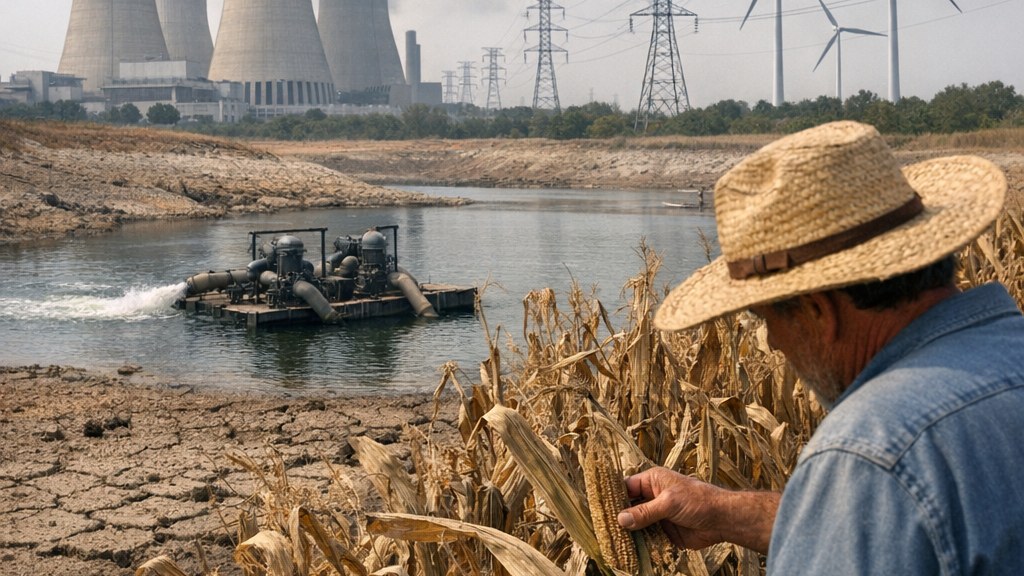
This creates difficult choices. A country may need more electricity for homes, factories and data centres at the same time that farms need power for irrigation and cities need power for water treatment. Heat waves can sharpen the problem by raising air-conditioning demand while drying soils and reservoirs.
## Climate and conflict make the links stronger
Climate extremes are one of the clearest ways the three systems meet. Drought can reduce crops and hydropower at the same time. Floods can damage fields, roads, water pipes and power lines. Heat can reduce labour productivity, stress livestock and increase power demand.
Conflict and economic shocks can deepen the impact. Many countries facing severe food insecurity are also dealing with violence, displacement, weak infrastructure or high import costs. In those settings, a fuel shortage or water failure can quickly become a food crisis.
The same pattern appears in cities. Rapid urban growth increases demand for food, electricity and clean water. If power grids are weak, water utilities struggle. If water utilities fail, public health and food markets are affected. If food prices rise, household budgets leave less money for energy and other needs.
## Responses are becoming more joined up
Governments and development agencies are increasingly using a food-water-energy approach. The goal is to avoid solving one problem by making another worse.
Examples include solar-powered irrigation that is paired with groundwater limits, wastewater reuse for farming, drip irrigation, drought-resistant crops, better reservoir planning and protection of wetlands and watersheds. Grid upgrades can also help water utilities and cold chains operate more reliably.
No single measure is enough. The main shift is in planning. Water ministries, agriculture departments, energy regulators and city authorities are being pushed to share data and design policies together.
The challenge is practical and immediate. Food, water and energy are the basic systems behind daily life. As demand grows and climate risks rise, their connections are becoming harder to ignore.
AI Perspective
The main takeaway is that resilience now depends on systems working together. A farm, a water utility and a power grid may look separate, but each can fail if the others are weak. Better planning will not remove every shock, but it can reduce the chance that one shortage becomes many shortages at once.


-134c72da.webp)


