[[[SUMMARY_START]]]
Artificial intelligence is becoming part of ordinary creative work, not only a separate tool for experiments.
Creators are using it to brainstorm, edit, resize, plan, translate, and test ideas faster.
The shift is raising new questions about ownership, disclosure, pay, and the value of human-made work.
[[[SUMMARY_END]]]
Artificial intelligence is changing creativity less like a sudden takeover and more like a quiet redesign of the tools people already use. The change is showing up in small moments: a designer cleaning up an image, a musician testing a sound, a video editor building a rough scene, or a creator asking software for five headline ideas before choosing one.
## AI Moves Into the BackgroundFor many people, AI is no longer a special project. It is becoming part of the normal creative workflow. Image generators, writing assistants, audio tools, video editors, and design platforms now place AI features inside familiar menus and apps.
That is why the change can be easy to miss. A poster that once took hours to resize for several social platforms can now be adapted in minutes. A rough storyboard can be produced before a team books a studio. A podcast clip can be cleaned, captioned, translated, and packaged for several channels with fewer manual steps.
Recent creator surveys show how quickly the shift has spread. One global survey of more than 16,000 creators in 2025 found that 86% were using creative generative AI. Common uses included editing, upscaling, enhancement, generating new visual assets, and brainstorming. Another 2026 survey of 3,000 professional creators in the United States and Britain found that AI was being used for content enhancement, idea generation, editing, production, and audience insights.
## The First Change Is Speed
The most visible impact is speed. AI can shorten early-stage work. It can generate draft images, suggest layouts, create alternate captions, remove backgrounds, clean audio, and turn long videos into shorter clips.
This does not always mean the final work is made by AI. In many cases, AI is handling the rough work that happens before a finished piece. That includes mood boards, visual references, test edits, color ideas, and draft copy.
Film and entertainment companies are testing the same pattern. AI tools are being used for pre-visualization, storyboarding, concept development, and production planning. In theme park design, AI is also being tested for design and pre-production visualization. These uses show how AI can shape the creative process long before an audience sees the final result.
## The Second Change Is Abundance
AI also changes the number of ideas people can test. A designer can compare 20 versions of a package. A small business can try several ad images. A musician can test different background tracks. A creator can prepare many versions of a thumbnail or intro.
This abundance can help people who do not have large budgets or teams. It can also make online spaces feel more crowded. When more content can be produced faster, attention becomes harder to win. Distinct style, trust, and recognizable human judgment become more important.
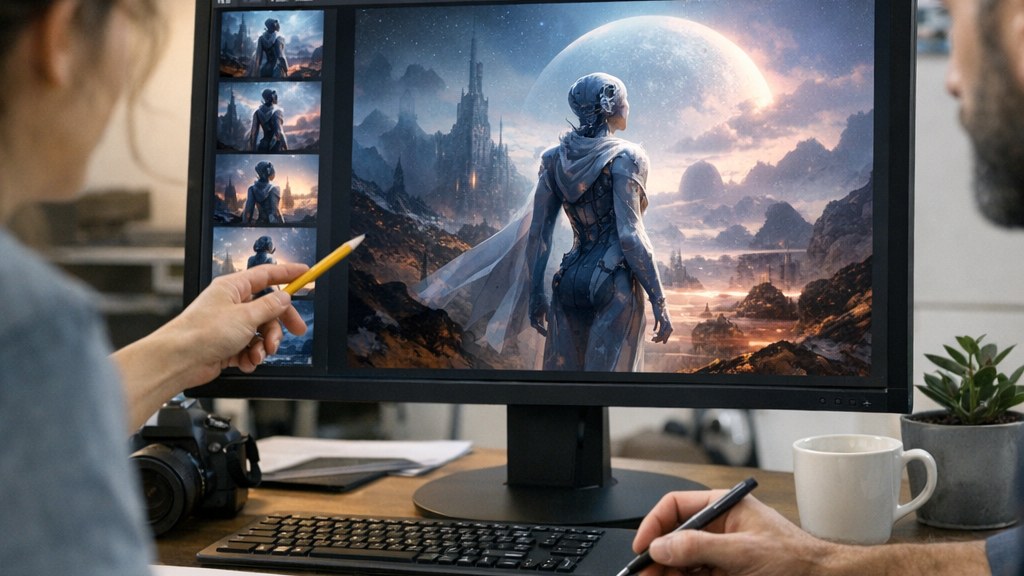
## Control Becomes the Main Question
The creative debate is not only about whether AI can make an image, song, or video. It is also about who controls the work, who gets paid, and whether audiences know how something was made.
Creators have raised concerns about their work being used to train AI without permission. They also worry about voice cloning, style copying, and fully AI-made content being released without clear disclosure. In the 2026 creator survey, 93% associated AI with significant risks in music, sound, or content creation.
Copyright rules are still developing. In the United States, copyright officials have examined AI-generated outputs, digital replicas, and the use of copyrighted material in AI training. The main direction is that human creative contribution matters. Pure machine output and human-guided creative work are not treated as the same issue.
Global cultural groups have warned that AI could add pressure to artists’ incomes, especially in music and audiovisual work. The concern is strongest where creators already face weak bargaining power, unclear licensing systems, and limited access to digital tools.
## Creativity Is Becoming More Managed
AI is also changing the business side of creativity. Independent creators are thinking more like small studios. They need rights records, licensing discipline, brand identity, and clear audience relationships.
This is a quiet but important change. Creativity is not only the act of making something. It is also the process of proving what is original, what is licensed, what can be sold, and what can be reused.
The next phase may be less about one dramatic AI artwork and more about thousands of small creative choices made with machine help. The tools will suggest, sort, polish, and remix. Humans will still decide what feels right, what should be published, and what carries meaning.
AI Perspective
AI is changing creativity most deeply in the early and hidden parts of the process. The key issue is not whether machines can make content, but how people use them while keeping control, credit, and trust. The strongest creative work may come from people who use AI for speed without giving up judgment or identity.


-134c72da.webp)


