[[[SUMMARY_START]]]
Workplaces are using more digital tools to track time, output, messages, tasks and performance.
The shift can help companies manage complex operations and improve safety.
But it can also weaken trust, reduce autonomy and make workers feel watched.
New data shows engagement remains low while stress stays high in many workplaces.
[[[SUMMARY_END]]]
Work has become easier to measure than ever. A manager can now see how many calls were handled, how long a task stayed open, when a delivery moved, or how often a worker used a business app. These tools can make organizations faster and more efficient. They can also make work feel less personal.
## The rise of measurable workDigital measurement is now built into many ordinary jobs. Office workers leave traces in email, chat, calendars and project tools. Call center staff are measured by handle time, wait time and customer scores. Warehouse employees may be tracked by scanners. Drivers and couriers often work with GPS, route tools and app-based ratings.
This is not only about surveillance. Many employers use data to plan staffing, improve safety, reduce errors and understand workloads. In hospitals, logistics, retail and customer service, better information can help teams respond faster. It can also show when systems are understaffed or when work is unevenly distributed.
The problem begins when measurement becomes a substitute for management. A dashboard can show activity, but it cannot always show judgment, care, creativity or the emotional work that keeps teams functioning. A worker may spend time helping a colleague, calming a customer or fixing a hidden problem. Those efforts may not appear as clean numbers.
## AI is expanding the scale of measurement
Artificial intelligence is adding a new layer. Companies are using software to help sort applications, schedule shifts, monitor workflow, summarize meetings, assess customer interactions and guide decisions. This is often described as algorithmic management: software that automates part of the work once done by human managers.
A 2025 study of more than 6,000 firms in France, Germany, Italy, Japan, Spain and the United States found that these tools are already common in many countries. Managers saw possible benefits, including more consistent decisions and higher efficiency. They also raised concerns about accountability, unclear system logic and worker health protections.
AI can help workers by removing repetitive tasks and making information easier to find. But it can also increase pressure when the surrounding culture does not change. A 2026 workplace survey of 20,000 knowledge workers using AI found a gap between employees who are ready to change how they work and organizations still using old metrics, incentives and expectations.
That gap is important. If workers are told to innovate with AI but are still judged mainly by speed, availability and volume, technology may add stress instead of reducing it.
## The human cost is showing
Global employee engagement remains weak. In 2025, only 20% of employees worldwide were engaged at work. Sixty-four percent were not engaged, and 16% were actively disengaged. Forty percent said they experienced a lot of stress the previous day.
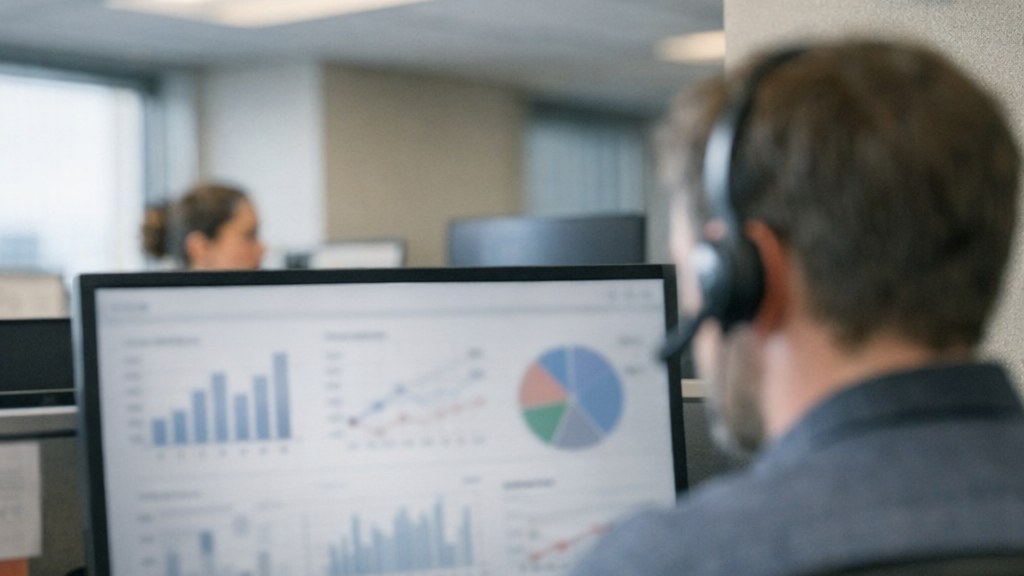
The same research showed a more mixed picture. Some monitored workers said the tools helped protect safety, keep them focused or make productivity visible. The reaction depended heavily on trust, role and workplace culture. Workers with higher psychological safety were more likely to view monitoring positively and less likely to feel anxious or mistrusted.
## Regulation is starting to respond
Governments are beginning to draw lines around the most sensitive uses of workplace technology. The European Union’s AI Act includes restrictions on emotion recognition in workplaces and schools, with limited exceptions. It also treats many employment-related AI systems as high risk, meaning they face requirements around transparency, oversight, accuracy and risk management.
In the United States, federal labor guidance has emphasized transparency, worker involvement, protection of rights and the use of AI to improve job quality rather than simply intensify work.
These steps show that workplace measurement is no longer only a business issue. It is also a question of privacy, fairness, health and power.
## The question is not whether to measure
Most modern organizations need data. Large companies cannot run complex operations by instinct alone. Workers also benefit when good measurement reveals unsafe conditions, unfair workloads or unclear goals.
The deeper question is what employers choose to measure and how they use the results. A humane workplace can use data as a tool for learning. A less humane one can use it as a tool for constant judgment.
The difference often comes down to transparency and voice. Workers are more likely to trust measurement when they know what is being collected, why it is being collected, who can see it and how it affects pay, discipline or promotion.
Work is becoming more measured because technology has made measurement cheap and constant. It is becoming less human when that measurement ignores context, relationships and the dignity of the people doing the work.
AI Perspective
The strongest workplaces will not be the ones with the most data. They will be the ones that use data with care and keep people involved in decisions that affect them. Measurement can improve work, but only when trust stays at the center.


-134c72da.webp)

